PRODUCT UPDATE / 3D assets · Character animation
fal launches Idol Max and Turbo for textured 3D meshes and rigs
Both models turn one image into a GLB mesh with UVs and 2K textures. Optional character rigs and preset motions give game teams another way to prototype an asset.
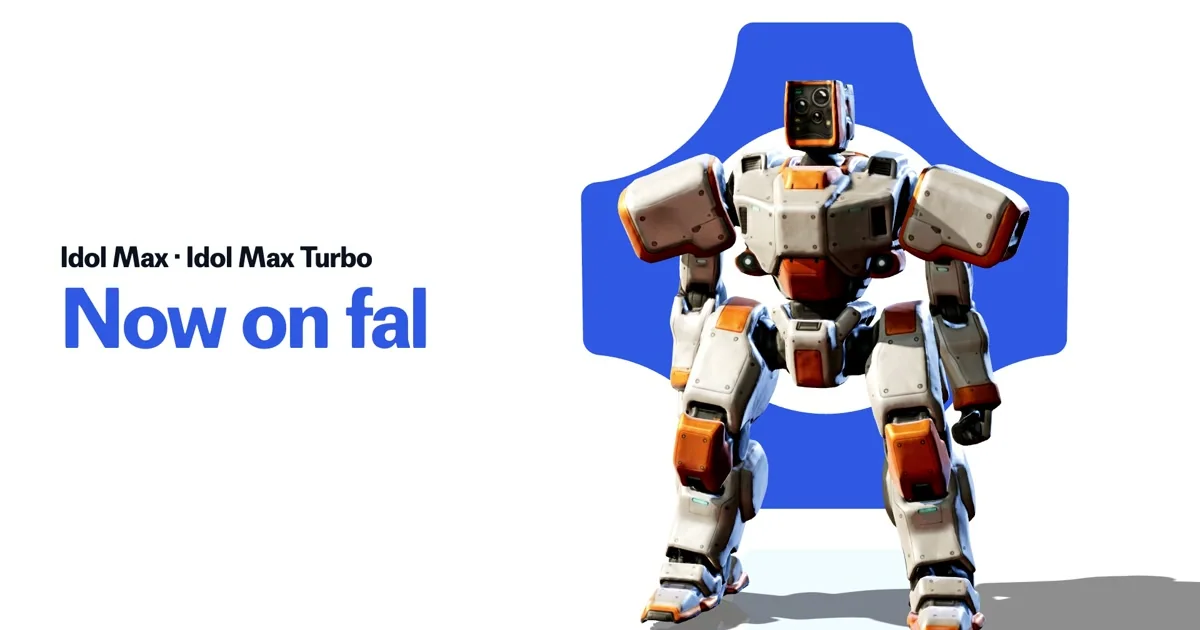
Try one character concept, then check the exported mesh and joint deformation in your engine.
fal made Idol Max and Idol Max Turbo public on November 18, 2026. Built on Idol by SperidLabs, both models turn a single object or character image into a textured 3D mesh. Optional rigging and preset motions give game teams a starting point for trying a character concept in a prototype. Idol Max · Idol Max Turbo · Product overview
Export a textured mesh from one image
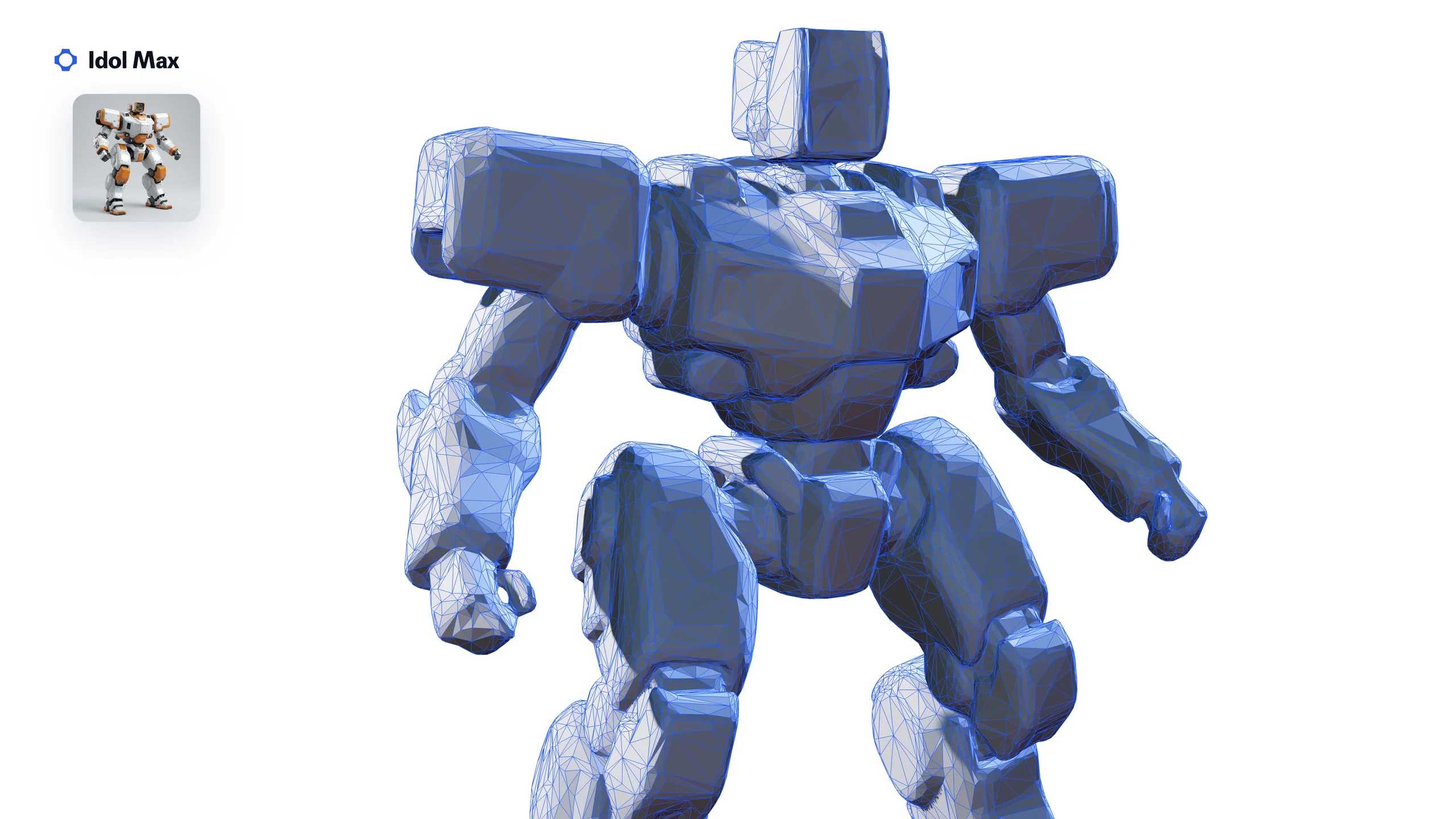
The models remove the background and return a GLB with 30,000 triangles, UVs, a 2048-pixel base-color texture and a normal map. Max repaints the base color from the input image; Turbo projects it from the generated Gaussian splat. The optional PBR setting adds roughness and metallic maps. A prop concept could therefore become a mesh to inspect from several angles before deciding which parts need rebuilding. Product overview
Choose the rigged file for character motion
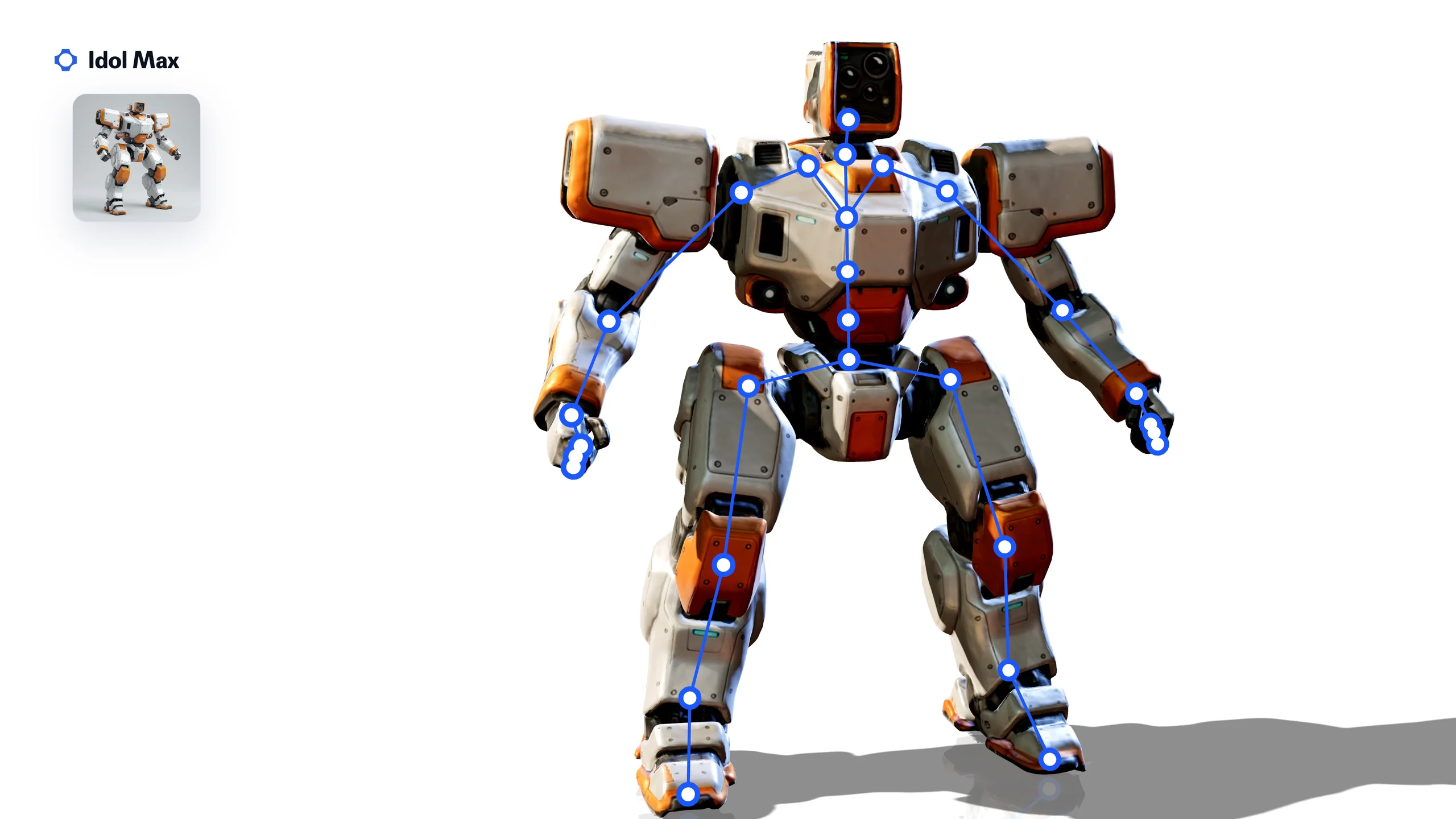
The API can add a skeleton and skin weights for characters and creatures. With rigging enabled, it returns a separate rigged_character_glb; the ordinary game_glb remains without a skeleton. Rigid props such as chests are unsuitable for the rigging option. Max API
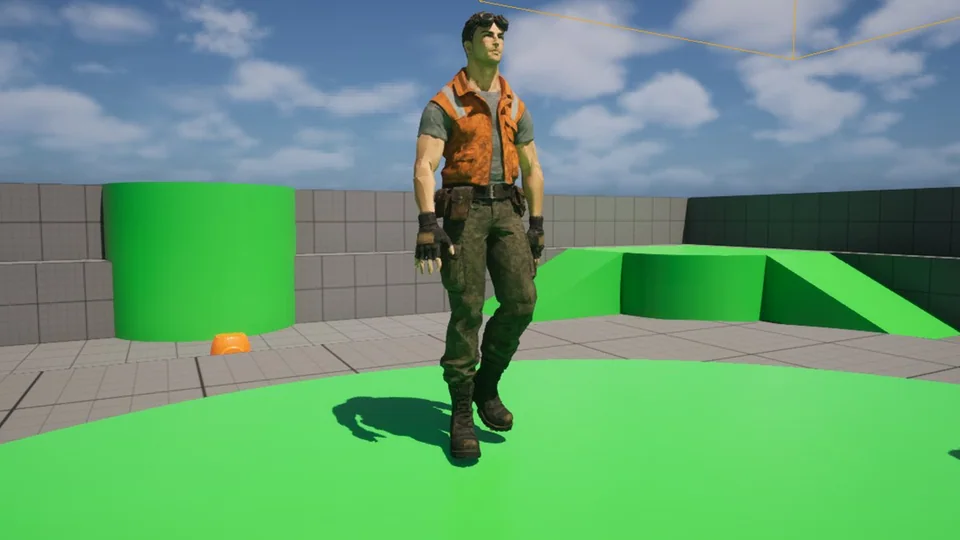
Walk, run, jump and idle are preset clips for human or four-legged-animal skeletons. The service leaves out clips a particular skeleton cannot play, and reports the included set in rig.animations. Check that list before importing a character, then inspect foot contact and joint deformation in the engine. Turbo API
Budget for the mesh and optional extras
Max costs $0.20 per generation, with $0.05 added for a successful rig. Turbo costs $0.10, with $0.025 for a successful rig. PBR materials add $0.10 on either model. Failed requests are not charged. Both endpoints have a browser playground and API access; API calls require a fal key. Max API · Turbo API
For a first trial, use one character image and one requested motion so the export is easy to inspect. See 3D Assets & Animation for related production workflows.
Sources (5)
Based on fal’s public product documentation and official examples. No sponsorship or affiliate links.