Repository understanding and multi-file edits
It can explore an existing repository, trace relevant code, propose a plan, edit several files, and use Git-aware context rather than waiting for pasted snippets.
O01O02You do not need to write every line of code to make a first playable game; Claude Code can turn clear direction into working software, while coding and engineering judgment matter more as the project grows.
PRODUCT OVERVIEW
Claude Code materially lowers the barrier to making a game. A person who cannot yet program can describe mechanics, ask it to create or change the project, play the result, and report what feels wrong instead of hand-writing every function. That can be enough to reach a first playable prototype or a small, well-scoped game. Programming knowledge and engineering intuition are accelerators and safety nets—not admission requirements for taking the first step.
Claude Code is Anthropic's agentic coding environment. It goes beyond line completion: inside an authorized repository it can search and read files, explain architecture, plan a change, edit multiple files, run terminal commands and build or test tools, inspect Git state, and iterate when checks fail. Permission modes and checkpoints can reduce accidental changes, but the developer remains responsible for the result.
It is available through the terminal, desktop app, VS Code, JetBrains, web, mobile, GitHub Actions, and GitLab CI/CD, subject to account and environment. Project instructions in CLAUDE.md, skills, subagents, hooks, MCP servers, and CI integrations can add conventions and tools. In a game project, this reach is strongest over source code and other text: scenes, Prefabs, Blueprint graphs, binary assets, visual fidelity, and playability still need an editor bridge or direct human verification.
Install the native client or an IDE integration and authenticate with an eligible paid Claude plan, a Claude Console API account, or a supported enterprise provider. Personal paid plans include Claude Code, while API usage is metered separately. Native Windows and WSL have different sandbox capabilities.
It can explore an existing repository, trace relevant code, propose a plan, edit several files, and use Git-aware context rather than waiting for pasted snippets.
O01O02With permission, it can run project commands, consume compiler or test feedback, inspect failures, and revise the implementation in the same task loop.
O01O12CLAUDE.md, skills, subagents, hooks, MCP, and plugins can encode conventions, split work, add tools, and connect external systems.
O01O02The same agent workflow can be entered from local development, supported editors, remote sessions, mobile review, or repository automation, with plan-specific differences.
O03O04INTERFACE & EXAMPLES
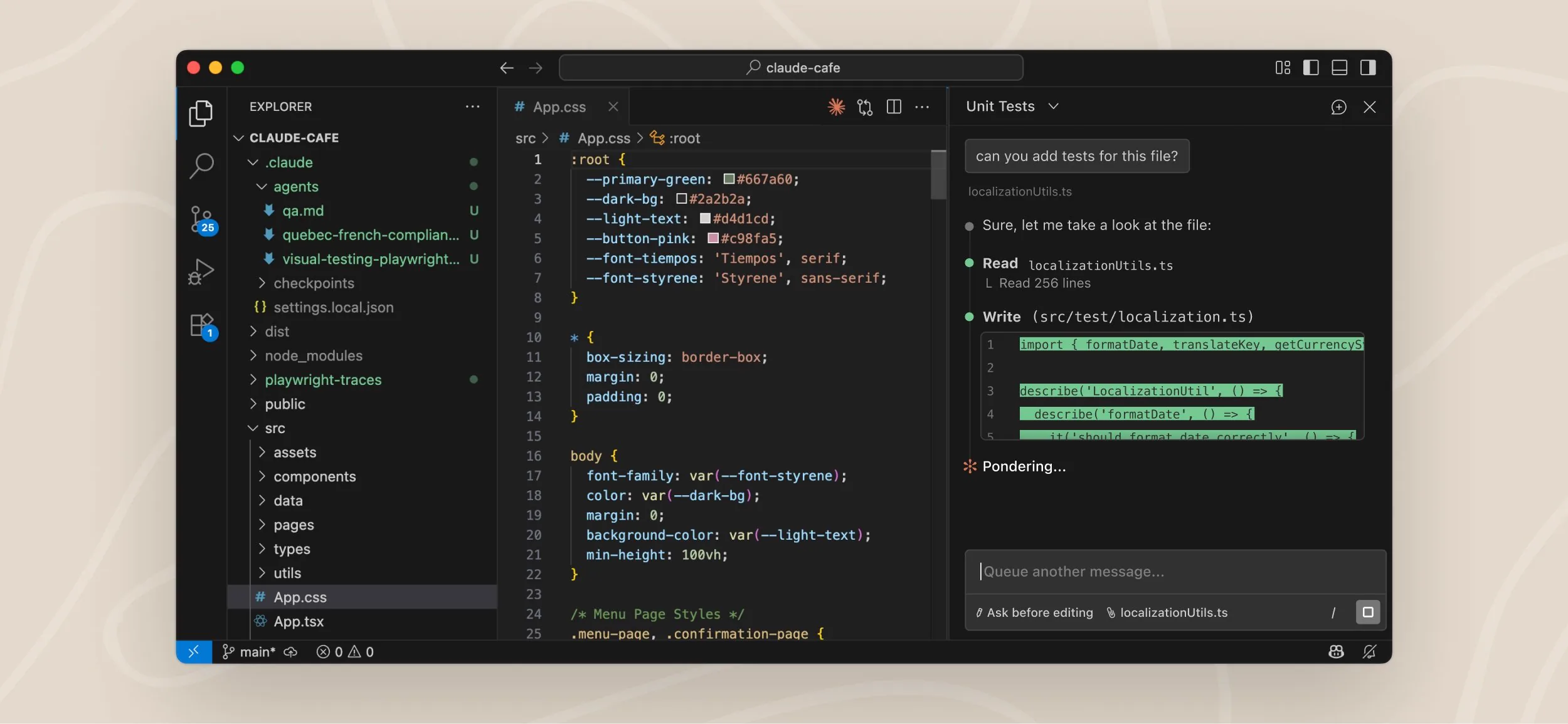
Claude Code's official VS Code example places the conversation beside project files and the editor.
This review covers beginner-directed prototypes and supervised repository work in game development: creating a first playable loop, understanding code, bounded features and fixes, refactors, debugging, and tests. It does not rank coding agents, guarantee that any beginner will finish a game, certify autonomous production delivery, or establish current editor-bridge maturity, code quality, security, performance, or time saved.
Beginner scope: Small browser games through the desktop entry point; complex deployment and engine projects are separate.
Agent scope: Call the coding agent from another workflow and collect structured results and project changes.
Confidence: learning Medium · Agent Medium
These are independent editorial judgments, not an overall score or a claim of hands-on agent integration testing.
KEY FINDINGS
Official product surfaces support file exploration, multi-file edits, terminal commands, build and test feedback, Git workflows, reusable instructions, subagents, hooks, and MCP. Those capabilities establish what can be attempted; they do not establish that a change is correct.
O01O02O03Public cases include two simple Unity tasks becoming playable quickly, a browser game built over three weeks, and a first-time game developer reporting a Steam release after intensive iteration. These uncontrolled reports do not establish a success rate, but they are enough to reject the idea that coding proficiency is required before Claude Code can be useful. Natural-language direction and honest play feedback can carry a beginner to meaningful results; expertise improves recovery, quality, and scale.
U04U06U11Across professional and community reports, the repeatable pattern is to research first, constrain the change, provide project context, let tools run, then review. Large or poorly structured repositories and open-ended tasks produce conflicting outcomes, so repository size alone is not a useful predictor.
U01U05U07U08Unity and Unreal reports support work on scripts and text, but GameObjects, scenes, Prefabs, Blueprint references, and binary assets introduce visibility and synchronization problems. MCP or editor bridges can help, yet the available cases do not establish universal maturity or reliability.
U01U02U03U04U11A structured Unity case still missed a blocked starting-room path after seven agent-run tests, while other project logs needed performance rewrites and manual debugging. Builds and automated tests are valuable gates, but player paths, visuals, random states, feel, and performance need separate acceptance.
U04U06U11Anthropic's postmortem and recent open issues show that product configuration, caching, system prompts, skills, providers, and nested tools can change behavior, compaction, and usage. Record the environment and keep recovery points instead of treating a model name as a stable result specification.
O14O15U09U10A subscription price, API bill, token count, session, commit, or line count does not say whether usable work was delivered. Compare total model, review, rework, CI, and integration cost with tasks that pass build, tests, code review, and necessary game checks.
O05O07O08O13U05U11EDITORIAL VERDICT
Claude Code is meaningfully useful even before a user knows how to program. If you can explain a mechanic, try the build, notice what is wrong, and keep iterating, it can help you reach a first playable prototype; public records include simple playable Unity tasks, a three-week browser game, and a first-time game developer reporting a Steam release. Coding skill, Git, tests, and engineering intuition become increasingly valuable as scope, integrations, performance demands, and release risk grow—but they are leverage and protection, not prerequisites for starting. The strongest repeatable evidence remains bounded code work, while editor-heavy visual state still needs direct play and inspection.
BETTER FIT
POORER FIT
WORKFLOW FIT
Describe the player's goal, controls, win and loss rules, visual references, and what should happen in the first few minutes. Ask Claude Code for a simple plan and plain-language explanations before it builds.
Let it implement one visible change, run the project checks, and explain what changed. Play that version before requesting the next mechanic or polish pass.
After builds and tests pass, enter the target engine and verify scenes, references, input paths, UI, visuals, random states, performance, and actual play.
Track spend, wall-clock time, human time, retries, rejected approaches, regressions, and final acceptance, then compare with a similar manual baseline.
RECOMMENDED WORKFLOW
Start with project constraints, reduce the field to two candidates, and use the same small prototype to test whether an engine gives both you and your AI agent a readable, executable, verifiable and recoverable workflow.
SHORTEST RESPONSIBLE PATH
This is a low-risk starting workflow synthesized from the evidence.
Choose a one-room or one-mechanic game that can become playable quickly; write the controls, objective, win and loss states, and a few visual references in ordinary language.
Start from a simple browser stack, a small engine template, or a clean project. Create a Git checkpoint or backup—you do not need Git mastery, but you do need a way back.
Ask Claude Code for a short plan and a first playable version. Have it explain unfamiliar terms and list exactly how to launch the game.
Require the normal build, static checks, and automated tests, but do not treat green output as completion.
Play it yourself. Report concrete observations—what you clicked, what appeared, what felt wrong, and what you expected—and iterate one change at a time.
If you cannot assess the code, get experienced review before adding accounts, payments, networking, sensitive data, complex dependencies, or preparing a public release.
Record model spend, total elapsed time, human effort, retries, rejected solutions, regressions, and whether the task was finally accepted.
PRICING & RIGHTS
Pricing and terms last checked: Aug 20, 2026
One accepted task has passed the project build, relevant automated checks, human diff review, and any necessary play, visual, scene, asset, and critical-path checks.
O05O07O08O13200k input + 20k output + 50k five-minute cache write + 500k cache read at the checked Sonnet 5 rates. This is arithmetic, not a measured task.
Anthropic's own usage-documentation example shows spend with zero lines added and zero removed—the clearest reason not to equate model cost with accepted output.
Pro and Max publish relative allowances, rolling windows, and weekly limits—not a stable token or accepted-task allocation.
Actual accepted-task cost = (allocated subscription cost or API spend + human planning, review, debugging, and rework + CI, MCP, and third-party fees) ÷ tasks finally accepted. Track failed tasks too; this page does not claim a typical dollar cost per feature.
Consumer and Commercial Terms apply to different account routes. Subject to those terms and applicable law, Anthropic assigns its rights in outputs to the user or customer, while requiring independent evaluation of outputs and agent actions. That allocation is not a guarantee of copyright, non-infringement, confidentiality, or release readiness; review the controlling contract for the account in use. This is not legal advice.
Prices, plan limits, default models, providers, product behavior, data controls, and retention can change. Consumer training settings and commercial defaults differ; local session history is also a device-security concern. Recheck the current plan, contract, provider, data policy, and client configuration before sensitive or production use.
PRODUCTION RISKS
Generated code can compile, pass an incomplete test, or look plausible while violating architecture, edge cases, performance, security, or maintainability. Human review and project-specific acceptance remain mandatory.
O12U04U05U07U11Text access does not automatically reveal scene state, Blueprint graphs, binary references, visual defects, feel, or every player path. Bridges add reach but also synchronization and reliability dependencies.
U01U02U03U04U11Long sessions, compaction, caching, model defaults, providers, skills, and nested tools can change recall, spend, or behavior. Versioned notes and recoverable checkpoints make incidents diagnosable.
O14O15U09U10Permission prompts and sandboxing reduce some hazards but do not remove responsibility for commands, secrets, uploaded code, external providers, or plaintext local session files. Match configuration to the project's contract and threat model.
O04O09O10O11O12Multiple agents can accelerate independent work, but overlapping files or problem spaces create conflicts, duplicate context, build contention, extra tokens, and more review. Isolate state and assign non-overlapping ownership.
U02U05U06NOT VERIFIED
RESEARCH METHOD
Research-reviewed from public evidence. We checked 15 official pages and coded 12 independent records across eight evidence types and nine effective platforms: Unity and Unreal communities, a structured Unity validation, a professional engineering article, a project log, Hacker News, GitHub Issues, Reddit, and an academic preprint. Twelve platform or site groups were searched; GameDev.net produced no usable result in this pass, Godot results were mainly promotional, and inaccessible video transcripts were not counted. Reddit contributes one record, no platform exceeds 16.7% of the independent set, vendor material is not counted as user evidence, and conflicting reports are retained. Confidence is medium: the workflow and validation boundaries recur across platforms, while current Sonnet 5 game-task outcomes and quantitative cost remain thin.
Official description of the agent loop, repository access, tools, sessions, checkpoints, permissions, and verification guidance.
Official repository and current product summary for terminal, IDE, Git, installation, plugins, and data-policy links.
Supported local, remote, IDE, mobile, and automation surfaces; availability can depend on plan and organization settings.
Current installation paths and the distinction between native Windows and WSL sandbox support.
Current personal-plan list prices and the inclusion of Claude Code in paid plans.
Official plan comparison and the limits of interpreting relative usage allowances.
Rolling usage windows, shared limits across Claude surfaces, and usage-credit options after a limit is reached.
Current per-token input, output, and prompt-cache prices used for the nominal API illustration.
Terms applying to consumer routes, including output-rights allocation and the user's duty to evaluate output and agent actions.
Terms applying to API and business routes; rights allocation does not itself establish copyright or non-infringement.
Training controls, service retention, local plaintext session storage, and longer retention for voluntarily submitted feedback.
Permission modes, sandbox boundaries, and the user's continuing responsibility for generated code and commands.
Cost controls and usage reporting; the official sample session spends money while showing zero lines added or removed.
Version history used to bound model defaults and rapidly changing product behavior.
Vendor postmortem showing that configuration, caching, and system-prompt changes can affect quality, memory, and usage independently of the model name.
A Unity programmer sees value in scripts and mechanisms but is wary of opaque edits to GameObjects, UI, components, and references; this is a first-person view, not a controlled test.
A parallel-agent Unity workflow reports a fragile community MCP bridge and uses sibling-project isolation plus locked test execution.
A UE5 developer reports difficulty tracking Blueprint and binary-asset references, then promotes a self-built tool; only the structural limitation is used and the promotional benchmark is excluded.
Two simple tasks were playable quickly; a more complex dungeon still had a blocking player-path defect after seven agent-run tests. The publisher discloses an Anthropic reseller relationship, so this record is not used alone.
A staff engineer's six-week production workflow emphasizes repeated passes, project context, non-overlapping agents, and layered review. Its speed and spend figures are self-reported and not generalized here.
A Phaser/PWA tower-defense project used narrow subagents and 698 BDD scenarios, yet still needed a later rendering-performance rewrite. The author promotes the resulting game and site.
A Hacker News thread contains both strong legacy-codebase results and reports of context overflow and harmful edits in large, poorly structured repositories.
A developer attributes progress to a detailed plan but estimated hours saved before review and testing were complete; the time claim is therefore not treated as net savings.
An open issue supplies reproduction details for an early context-limit warning in one Windows, model, provider, and skill configuration; it is not evidence of a universal defect.
An open issue presents measurements suggesting nested advisor calls can amplify counted context and trigger early compaction in a specific configuration.
A first-time game developer reports shipping with Unity MCP after intensive evenings, a Pro-to-Max upgrade, log-driven debugging, and repeated regressions. Shipping does not establish quality or net agent contribution.
A preprint links adoption with broader language activity in a large GitHub panel but explicitly cannot establish strict causality, code quality, game quality, or net time savings.
DISCLOSURE
Independent editorial research. MakeGameWithAI has no affiliate link, sponsorship, vendor-provided account, free credits, equipment, interview, or technical support for this review. The project owner has used Claude Code, but that experience is background and is not counted as first-party validation. U04's publisher discloses an Anthropic reseller relationship; U03, U06, and U11 contain self-promotion. Those records are labeled, down-weighted, and cross-checked. Owner Review was completed before publication, and the beginner-access framing was reviewed again on Aug 24, 2026.
This public research review will be revisited when pricing, terms, product versions, or material new evidence changes.
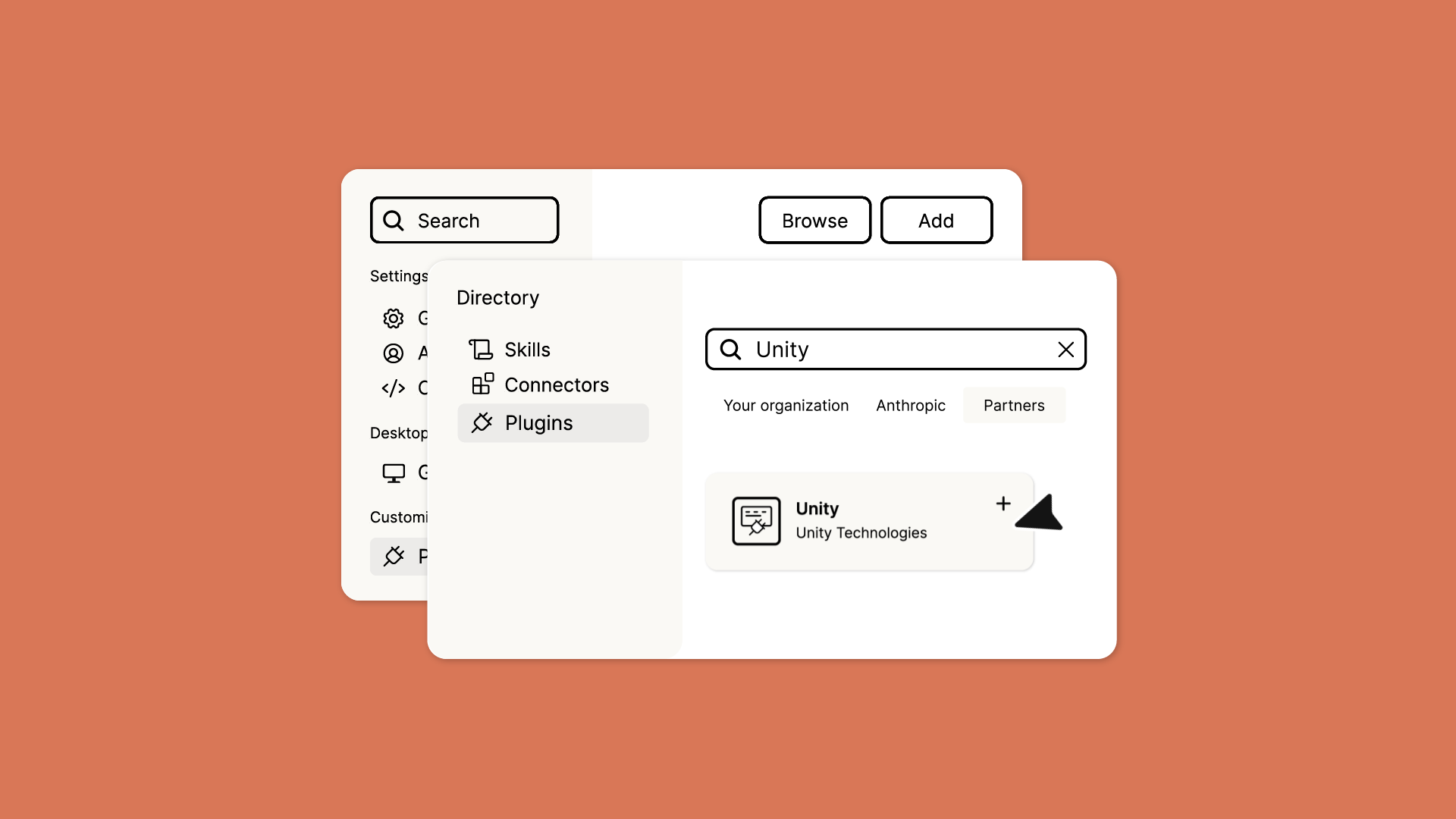
Unity has packaged its engine guidance into an official agent plugin. The September 9 announcement focused on Claude Code, while Unity's current documentation and repository now provide a Codex installation path; live Editor control still requires the Unity CLI and Pipeline package.
Read article