PRODUCT UPDATE / Local models · Voice interaction
Liquid AI releases LFM3-Omni-2B for local vision and voice
The October 27 release combines visual and audio inputs with text or speech replies in an open-weight model. It offers a starting point for local NPC dialogue prototypes, with application integration still required.

Developers prototyping voiced NPC conversations or assistants that respond to a supplied game image and a spoken question.
Liquid AI released LFM3-Omni-2B on October 27, alongside the wider LFM3 family. The open-weight model combines text, images, video and audio as inputs and can answer in text or speech. For game developers, it offers a starting point for local voice-dialogue prototypes, including NPCs responding to a supplied scene image and a spoken question. The game still needs its own integration.
Pictures and speech in one model
The release announcement introduces Omni as Liquid’s first model combining vision, audio and language. Its capability guide demonstrates spoken questions about images, questions about video with its soundtrack, and replies that interleave text and speech. For speech-only work, the same release also includes LFM3-Audio-2B.
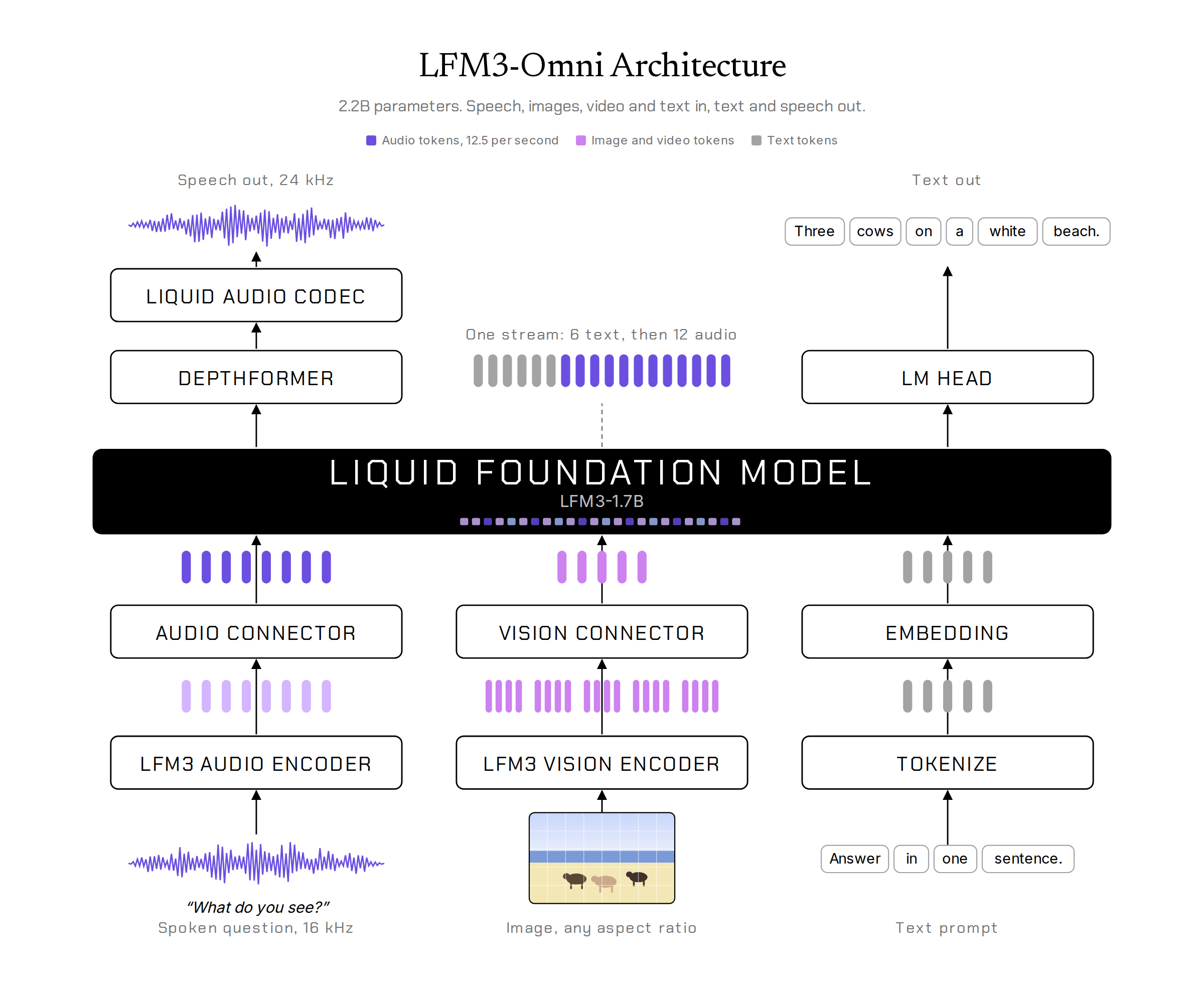
The model card lists 2.17 billion parameters and a 32K-token context window. BF16 weights target GPU inference, while GGUF provides a local CPU/GPU route, including a real-time speech server. Runtime support varies: the card lists SGLang for text output.
The model can propose tool calls from spoken requests and visual context. The application parses and executes those calls, then returns the results. A prototype could connect that mechanism to a small set of game actions while supplying the current scene as an image. Target-device latency and dialogue consistency would still need checking.
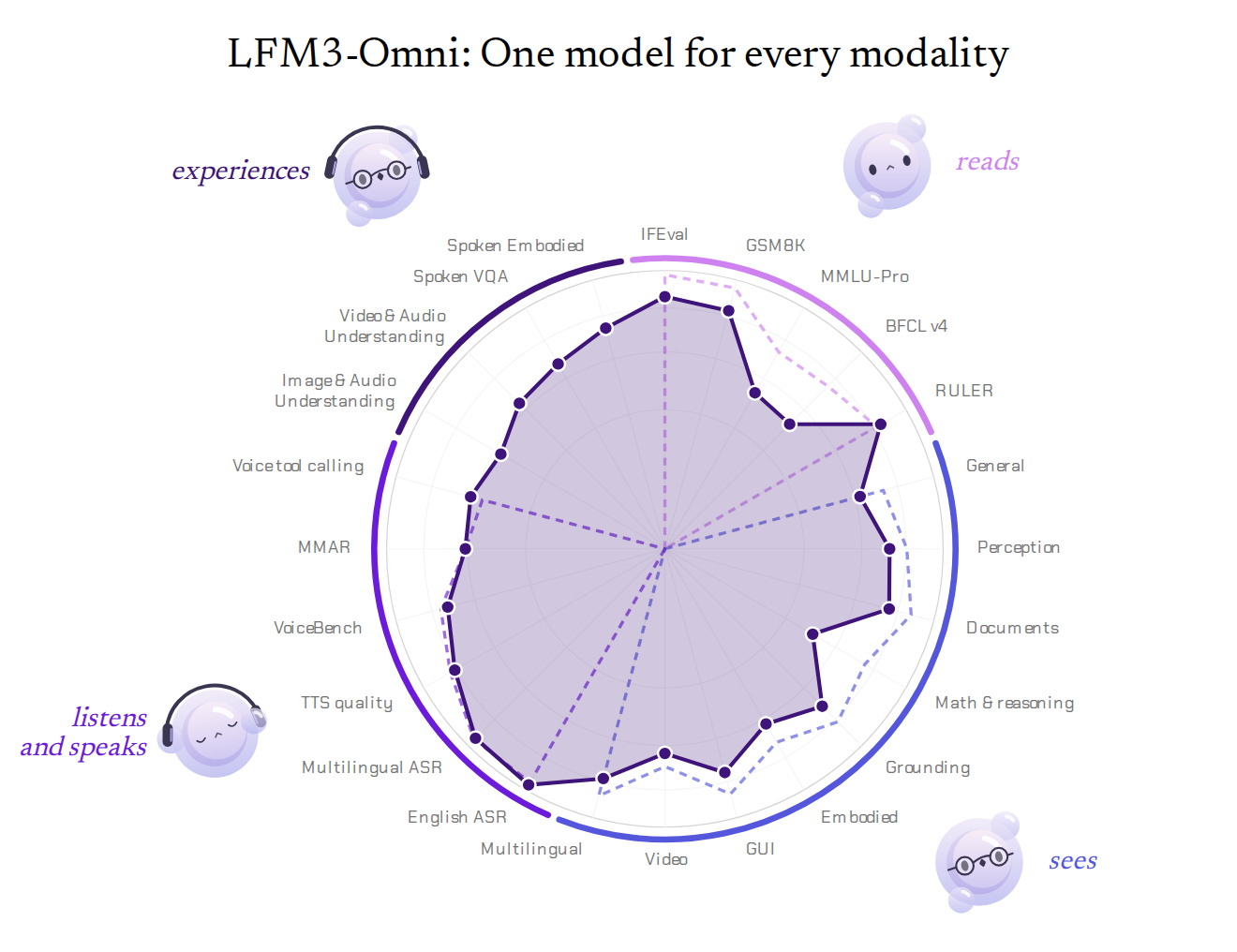
The chart summarizes Liquid AI’s own benchmark measurements across modalities. Those scores do not establish performance inside a running game. The narrative and NPC category collects related production tools.
Local licensing and hosted API charges
Local deployment follows the LFM Open License. Liquid’s pricing page lists a free open-weight tier for businesses below $10 million in annual revenue; larger businesses need a paid license. Local hardware and operation remain the developer’s costs.
The hosted Omni API is metered separately. Per million tokens, current text input/output prices are $0.10/$1, and audio input/output prices are $2/$10. These are modality-specific token rates, not a per-minute price for an NPC conversation.
Sources (5)
Based on official announcements, model cards and public documentation. No sponsorship or affiliate links.