PRODUCT UPDATE / AI NPCs · On-device inference
Atelico opens Early Access to its on-device AI engine for games
The October 29 launch offers local AI inference and dialogue controls for Godot, Unity and Unreal projects. SDK places are limited, and the published GPU figures describe specific vendor workloads.
Design dialogue rules and budget rendering, inference and model memory together before adopting a local NPC runtime.
Studio Atelico opened limited Early Access to the Atelico AI Engine on October 29. The runtime puts language models, speech and image generation on the player's device, alongside a system for NPC behavior. For teams building dialogue-driven games, it brings local inference and control over authored content into the same project. SDK access is still by request through the official launch page.
The integration guide describes Godot 4 GDExtension support, Unity C# bindings for Windows, macOS and Linux standalone builds, and an Unreal Engine 5 subsystem with Blueprint support. These are native integration paths; the Early Access invitation remains limited.
Retrieve authored lines and control character states
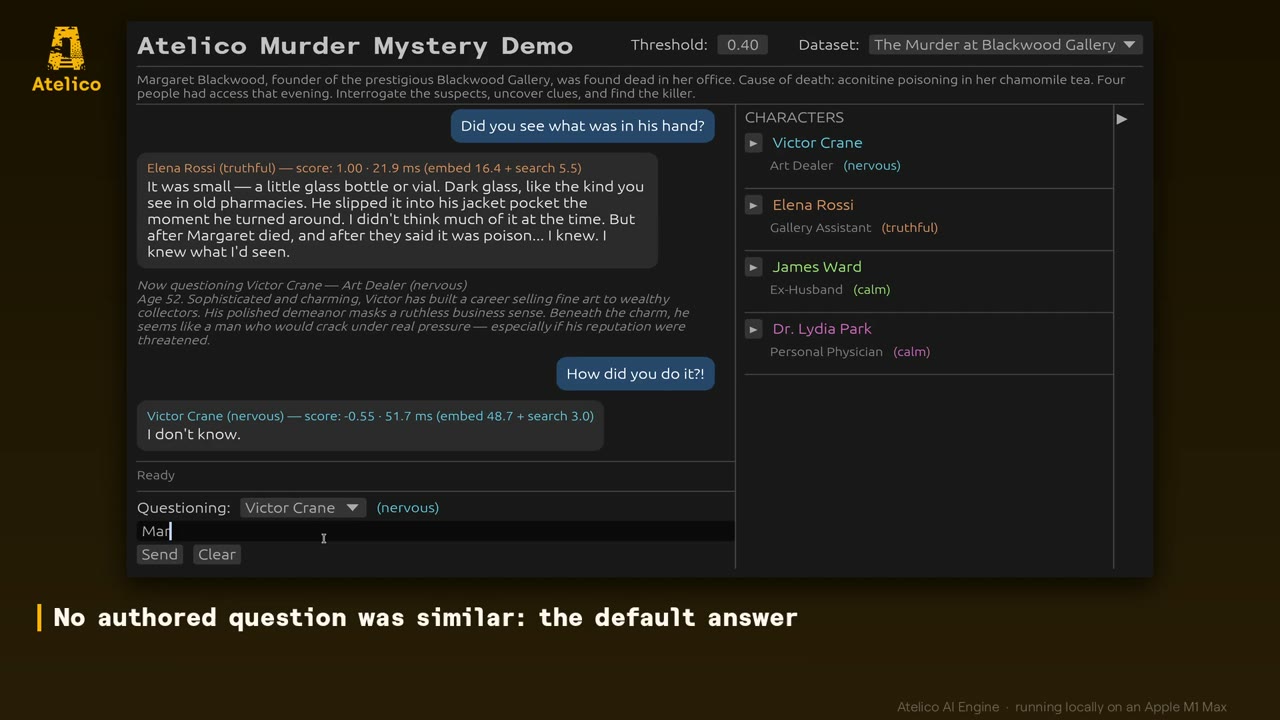
The creative-control guide describes indexing dialogue with metadata and retrieving lines by meaning. Character states can determine which responses are available. When generation is needed, choice lists, JSON schemas or grammar constraints can shape the result, with configurable filters and rewriting rules around it.
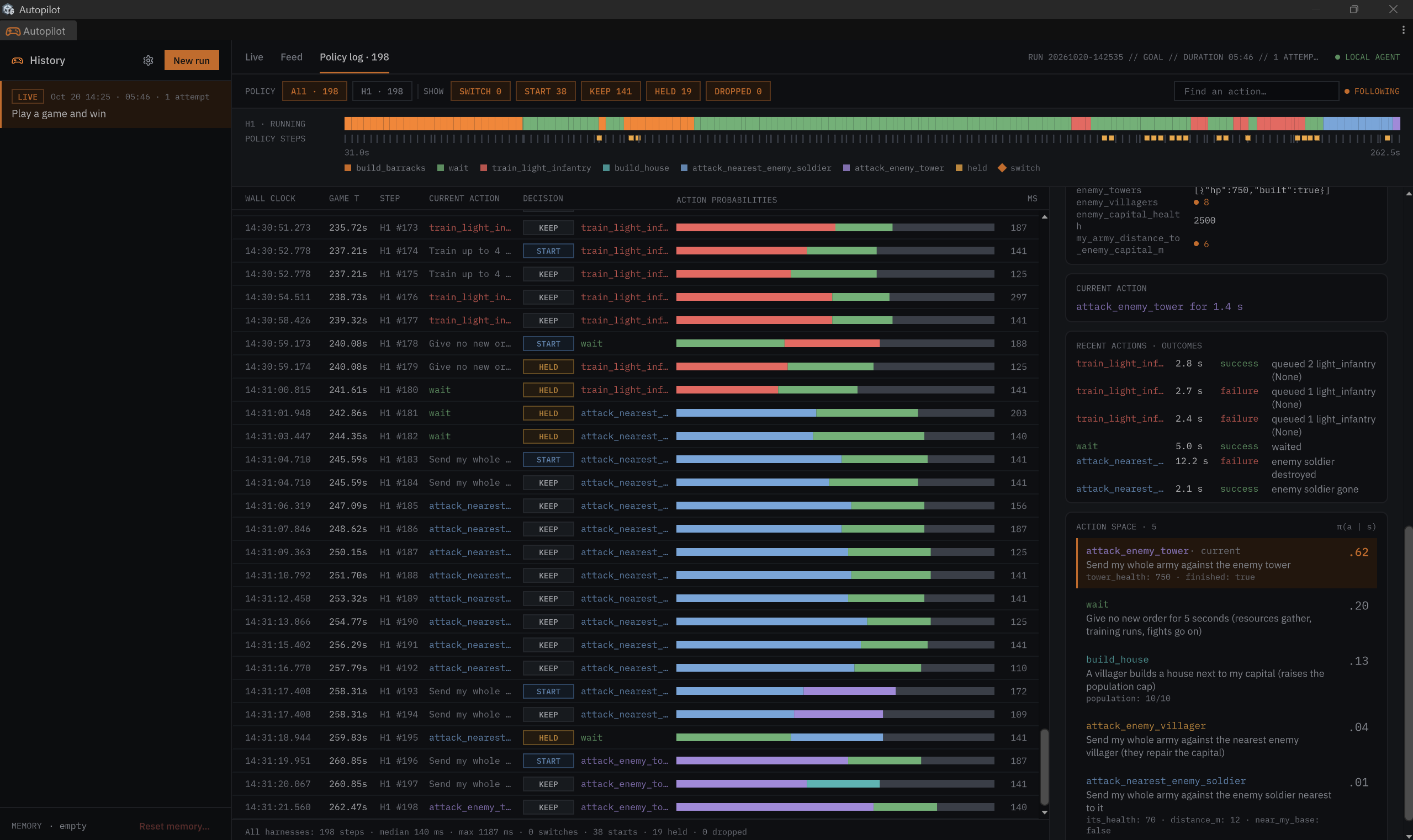
A mystery game could use free-form player questions while keeping a suspect's responses tied to designer-defined emotional states. Authored lines, state transitions and fallback behavior still need to be designed for the game. The official demo illustrates that authoring approach.
Budget GPU time alongside rendering
Atelico's Compute Graphics Scheduler shares GPU time between inference and rendering. The integration API offers graphics-first, balanced and compute-first priorities.
In its benchmark table, Atelico reports 121 FPS in Balance mode against a 123 FPS game-only baseline for San Miguel at 4K on an RTX 5080, with a Llama 3.2 3B inference workload. The 3 FPS control runs its own engine in a separate CUDA context. It is not a measurement of every competing inference tool.
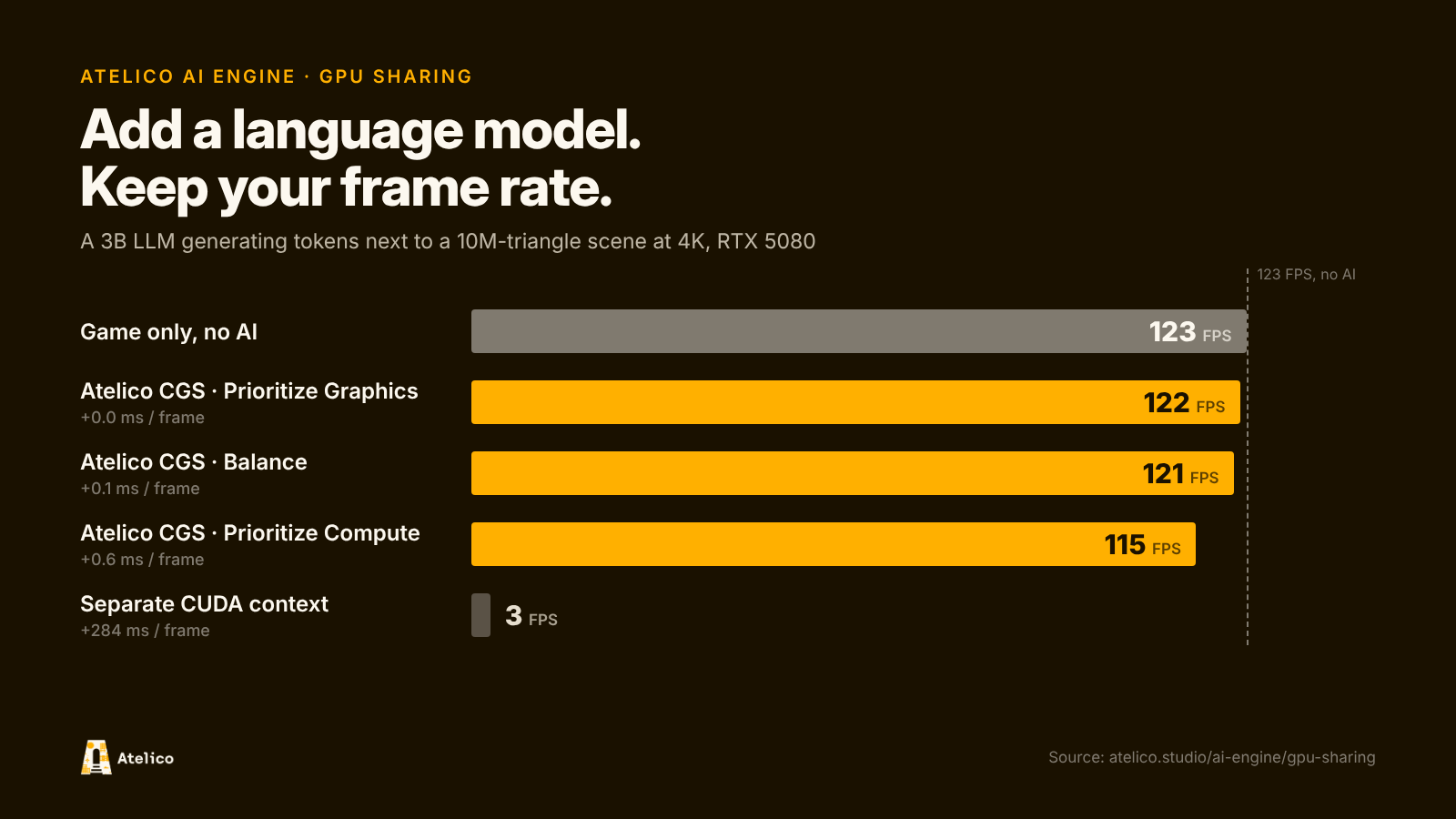
These are vendor measurements for that hardware, scene and model, rather than a frame-rate guarantee for another game. The benchmark page also estimates model memory use; rendering, model weights and context caches need to fit the target device together.
Local inference avoids per-request cloud inference charges. The launch does not specify SDK licensing prices, so that does not establish a free SDK. For a first dialogue prototype, the Narrative, Dialogue & NPCs category provides related tools to compare.
Sources (5)
No sponsorship or affiliate links in this article.