PRODUCT UPDATE / Coding · Model orchestration
Google releases Gemini 4 Hydrogen for coding and model handoffs
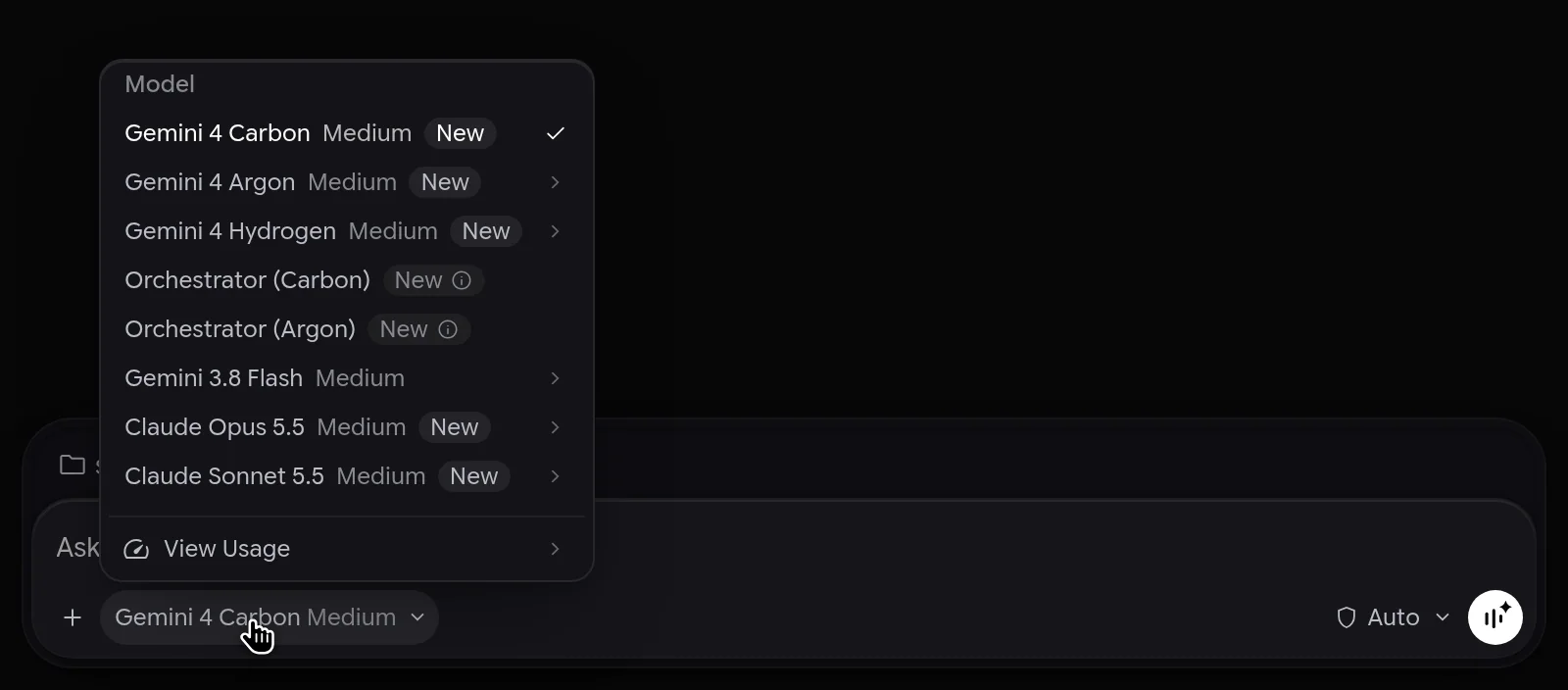
Hydrogen is available through the Gemini API and Antigravity. Game teams can set its thinking level or use Orchestrator to hand planning and code edits between models.
Start with one bounded code change and inspect the diff and test results before keeping it.
Google released Gemini 4 Hydrogen on November 12, 2026 for everyday coding and tool-using work. It is available in Google AI Studio and the Gemini API, and the launch brings it to Google Antigravity alongside Orchestrator. For a game team, that provides another model for iterating on controls, interface code and tests, with an option to hand planning and implementation between models. Launch announcement · API availability
Google’s launch also includes Geminisland, a shared voxel-island demo where a prompt adds structures that players can explore in first person. It offers a concrete game example alongside the model’s coding and maintenance demonstrations. Google’s game example
Give Hydrogen one maintenance change
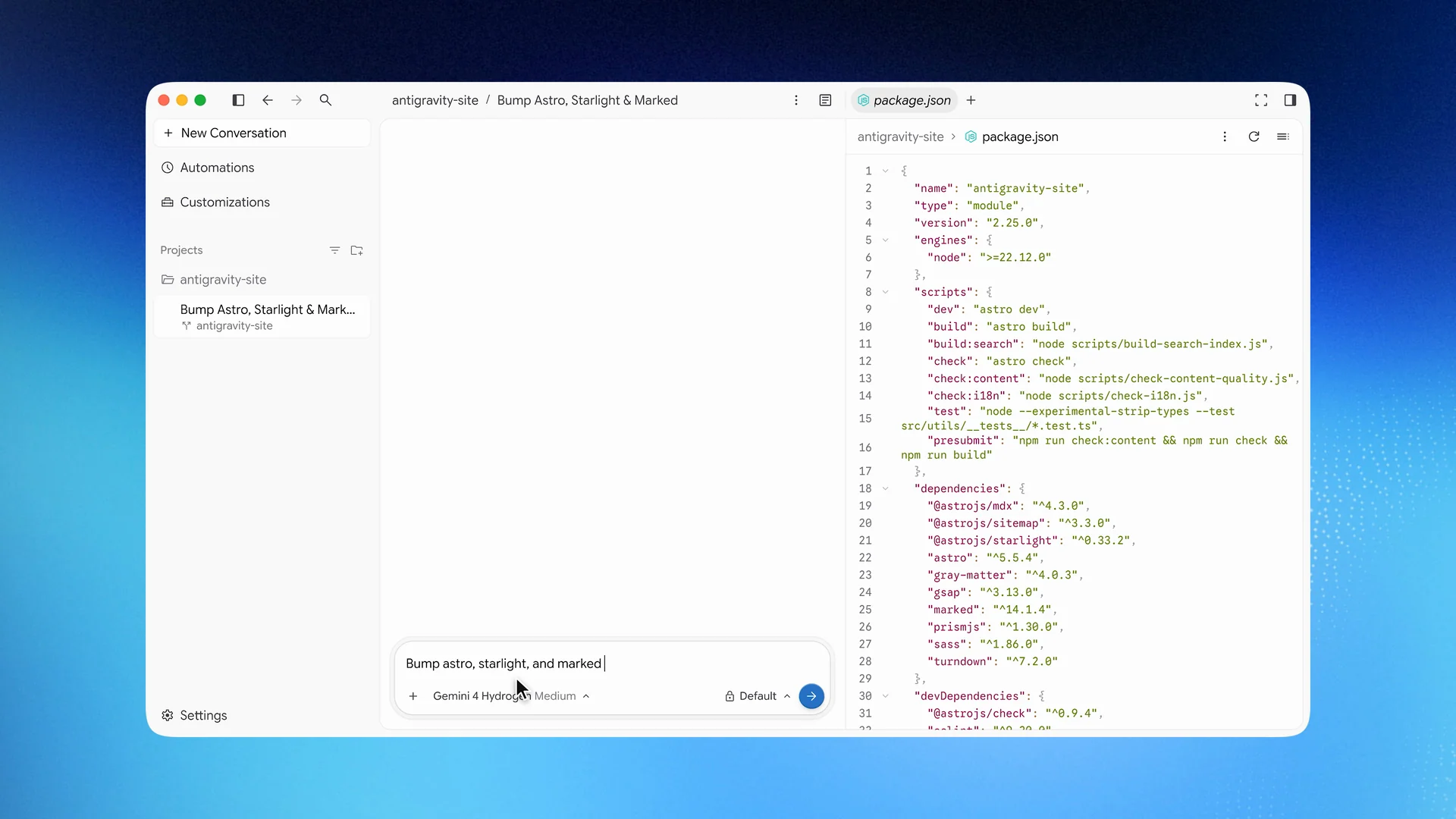
Google’s Antigravity demonstration starts with a request to update Astro, Starlight and Marked in an existing web project. A similarly bounded task in a browser game could be to update one build dependency and run the project’s tests. Specify the files or packages in scope, then inspect the diff before keeping the changes. Antigravity demonstration
Hand planning and edits between models
Orchestrator keeps one agent in the conversation and switches models within a turn. A planning model examines the task and prepares a plan; Hydrogen carries out edits and tool calls, with progress returning to the planner for review or replanning. For a control bug that spans several files, this could keep investigation and implementation in the same conversation. The available planner models depend on the account’s plan. Model selection guide
Orchestrator uses a fixed configuration. To set reasoning depth yourself, select Hydrogen directly: its API supports low, medium, high by default, and xhigh. The last setting uses more tokens and takes longer, so reserve it for problems that need the extra reasoning. Thinking levels · Orchestrator settings
Check the API budget and entry point
The stable API model ID is gemini-4-hydrogen. Its 1,048,576-token context window is shared by input, thinking and output. Default synchronous output is capped at 65,536 tokens; longer responses require the documented long-decode path. Model limits · API guide
The standard paid API charges $1.50 per million input tokens and $7.50 per million output tokens, including thinking tokens in the output price. Hydrogen also has free-tier access with limits. Google’s Antigravity launch names paid AI Pro and Ultra subscribers; check the model menu and quota for your account before choosing that route. API pricing · Antigravity availability
See Prototyping & Coding and Testing & Optimization for related game-development workflows.
Sources (6)
Based on Google’s public announcements, documentation and demonstration images. No sponsorship or affiliate links.