PRODUCT UPDATE / Text-to-motion · Character animation
Scenario adds NVIDIA Kimodo for text-to-motion BVH exports
The November 6 integration produces 30 fps SOMA motion from text, with BVH and NPZ downloads. Each prompt covers up to 10 seconds; adapting clips to a game character remains a separate step.
For developers preparing humanoid animation drafts for an existing character pipeline; target-rig retargeting and motion cleanup still matter.
Scenario added NVIDIA Kimodo Text to Motion on November 6, giving developers another way to draft humanoid animation from a written action. Each prompt can produce up to 10 seconds at 30 fps, and multiple prompts can be chained into one clip. The result is skeleton motion that still needs adapting to the game’s character rig.
The integration exports BVH on the 77-joint SOMA skeleton, alongside raw NPZ data. Scenario also lists Kimodo in its API v2.144.0 model catalog. A team could use a description of walking, turning or gesturing to prepare an animation draft, then continue editing and retargeting it in its existing pipeline.
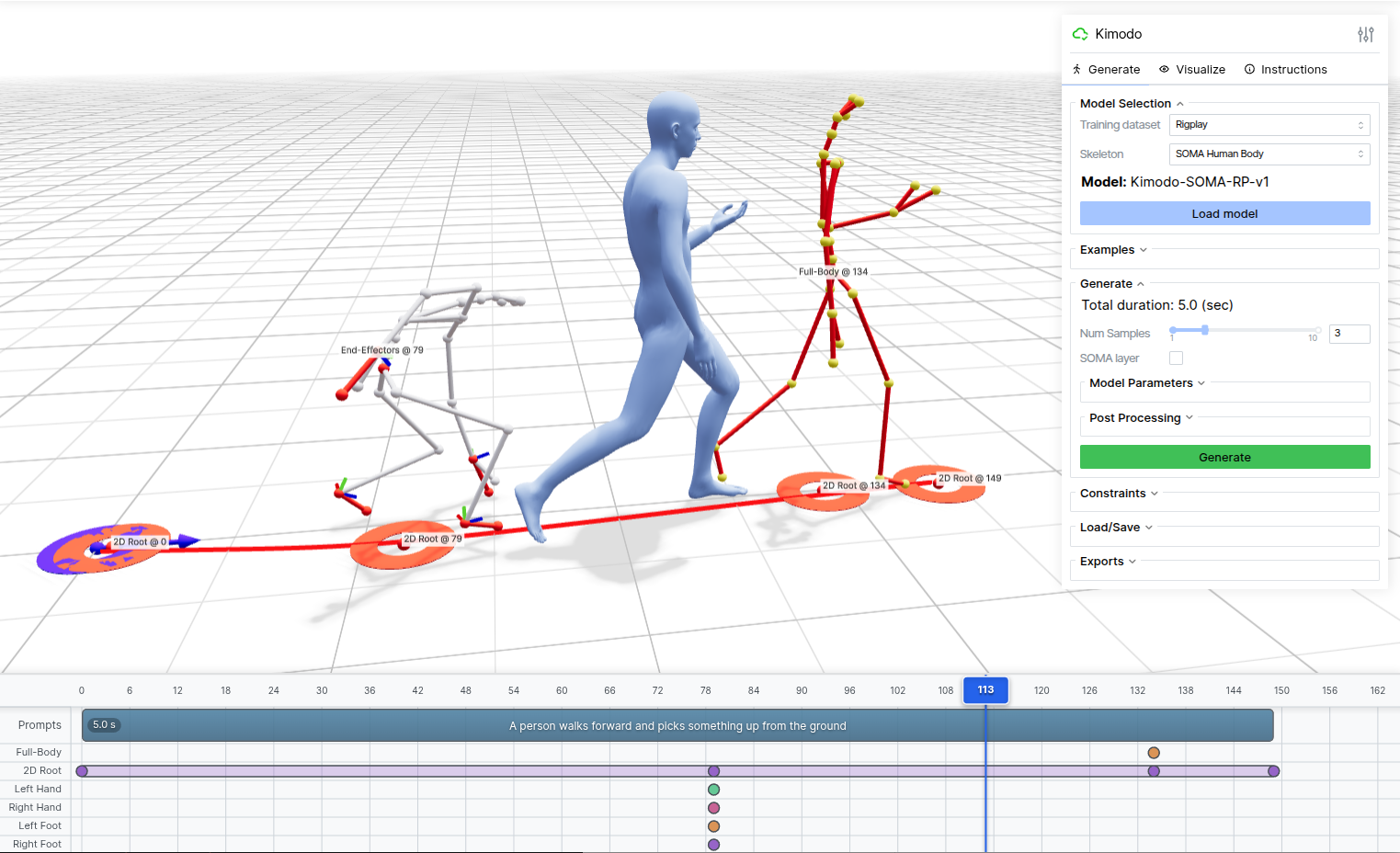
Kimodo generates a sequence of skeleton poses, with separate predictions for root movement and body pose. Character meshes and textures remain separate assets. The figures are NVIDIA’s 2026 reference material for the model and its local demo.
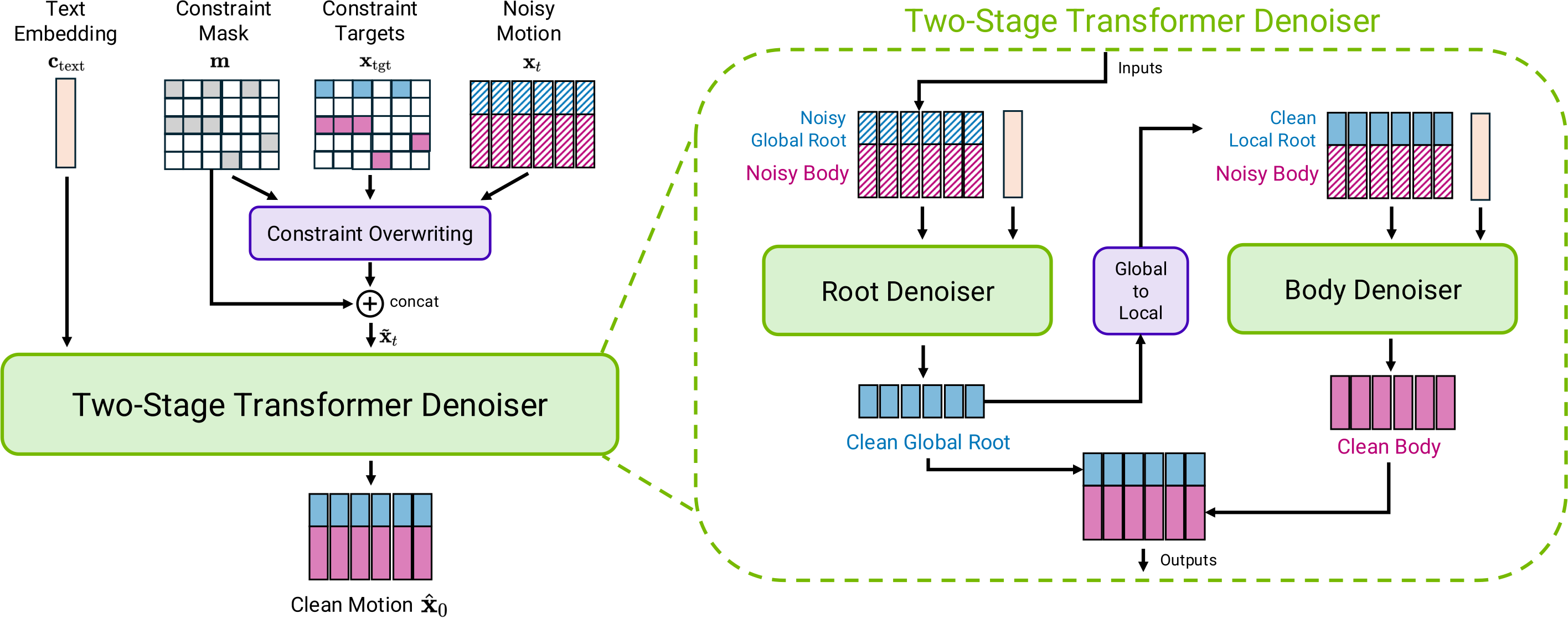
Account for the SOMA skeleton
The 77-joint export describes the output representation. NVIDIA’s skeleton documentation explains that Kimodo predicts motion on a simplified 30-joint skeleton, then expands it to 77 joints. The simplified skeleton removes much of the finger and hand detail, so an export’s joint count alone does not establish fine hand animation.
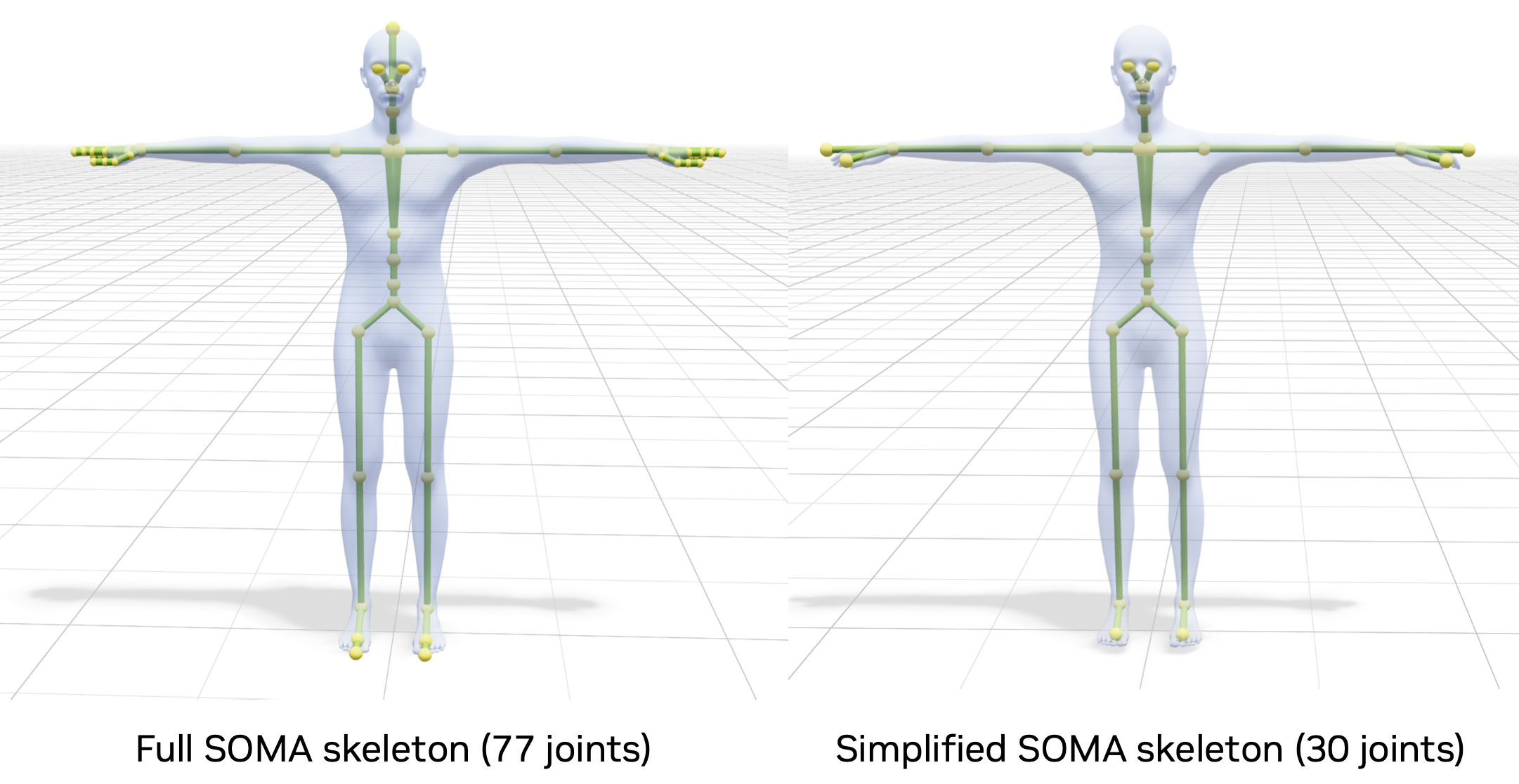
For a game character, plan to map the motion to the target rig and check proportions, foot contact, root movement and loop transitions. These are animation drafts for further production work.
Scenario generation uses credits, with the cost shown in the generator according to the model and output settings. Its current pricing FAQ restricts free-plan outputs to personal and evaluation use; a commercial project should check the applicable paid plan and terms before using generated motion.
The Scenario tool profile covers the wider asset workflow. The 3D assets and animation category offers related tools for preparing characters and finishing their animation.
Sources (6)
- Scenario · November 6: NVIDIA Kimodo Text to Motion
- Scenario · Public changelog, entries 532 and 529 (API v2.144.0)
- NVIDIA · Kimodo research and motion-generation model
- NVIDIA · Kimodo local interactive demo documentation
- NVIDIA · Kimodo SOMA skeletons and export representation
- Scenario · Credits, free use and commercial-use FAQ
Based on official announcements and public documentation. No sponsorship or affiliate links.