PRODUCT UPDATE / Game asset pipelines · Coding agents
Ludo adds 32 free local asset tools for coding agents
The Asset Toolbox measures sprites, writes engine files and inventories asset folders without an account or credits. Generating new assets through the CLI still requires a paid plan and credits.
For developers using coding agents to prepare existing assets for a game project.
Ludo added a free Asset Toolbox on October 27, bringing 32 local tools to its CLI. Coding agents can use them to prepare existing sprites, textures, audio and glTF models for a game project. The toolbox works offline without an account or credits, including on assets made elsewhere.
Prepare sprite files for Godot, Unity and Phaser
The toolbox guide shows a character workflow that measures scale across animation sheets, finds a pivot between the feet, and fits collision shapes around the body. Developers can request an overlay to inspect the proposed collider. Export produces Godot SpriteFrames, Unity sprite metadata and animation clips, or a TexturePacker JSON atlas for Phaser and PixiJS.
Other tools split sheets, align several moves to one frame size and ground line, and score the transition from the last frame back to the first. Grid detection asks for an explicit grid when uncertain. These measurements give an agent concrete values to work with; animation transitions and collisions still need checking in the target game.
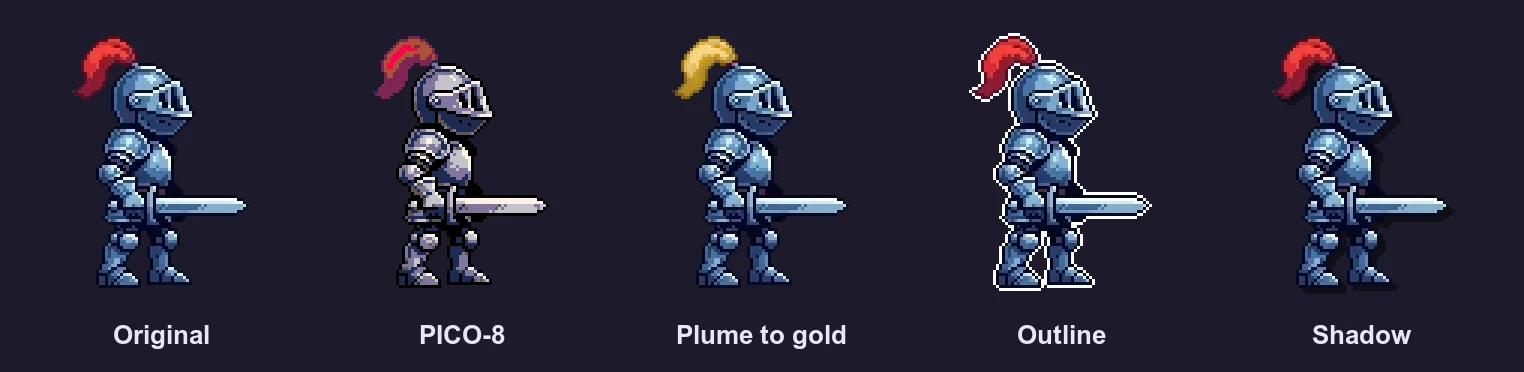
Image tools also swap palettes, add outlines or shadows, and measure texture seams. Ludo's lava example shows the repeated tile used for that check.

Inventory a folder before generating more assets
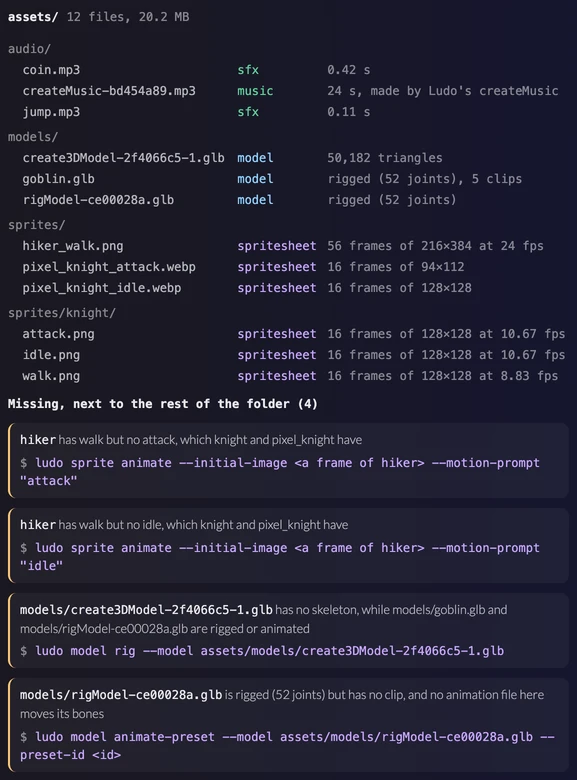
asset manifest classifies files and suggests gaps by comparing neighboring assets. In the official example, one character has a walk but lacks the idle and attack found on others; a separate model lacks a skeleton. The report includes suggested generation commands. Audio tools inspect loudness, tempo and loop clicks, while model info reports a GLB's geometry, rig and animation clips.
The CLI repository provides the MIT-licensed code. The toolbox requires Ludo CLI 0.2.0 or later and Node.js 20 or newer; video operations and some audio formats also need ffmpeg. Agents receive JSON results and saved paths.
Generating the suggested new art through the CLI requires login, a Pro or Studio plan, and credits. Ludo's pricing page limits unlimited generation to the web app. The CLI also sends usage and crash telemetry; its documentation lists LUDO_TELEMETRY=0 or DO_NOT_TRACK=1 to disable both.
Sources (4)
No sponsorship or affiliate links in this article.