PRODUCT UPDATE / Image to 3D · Product update
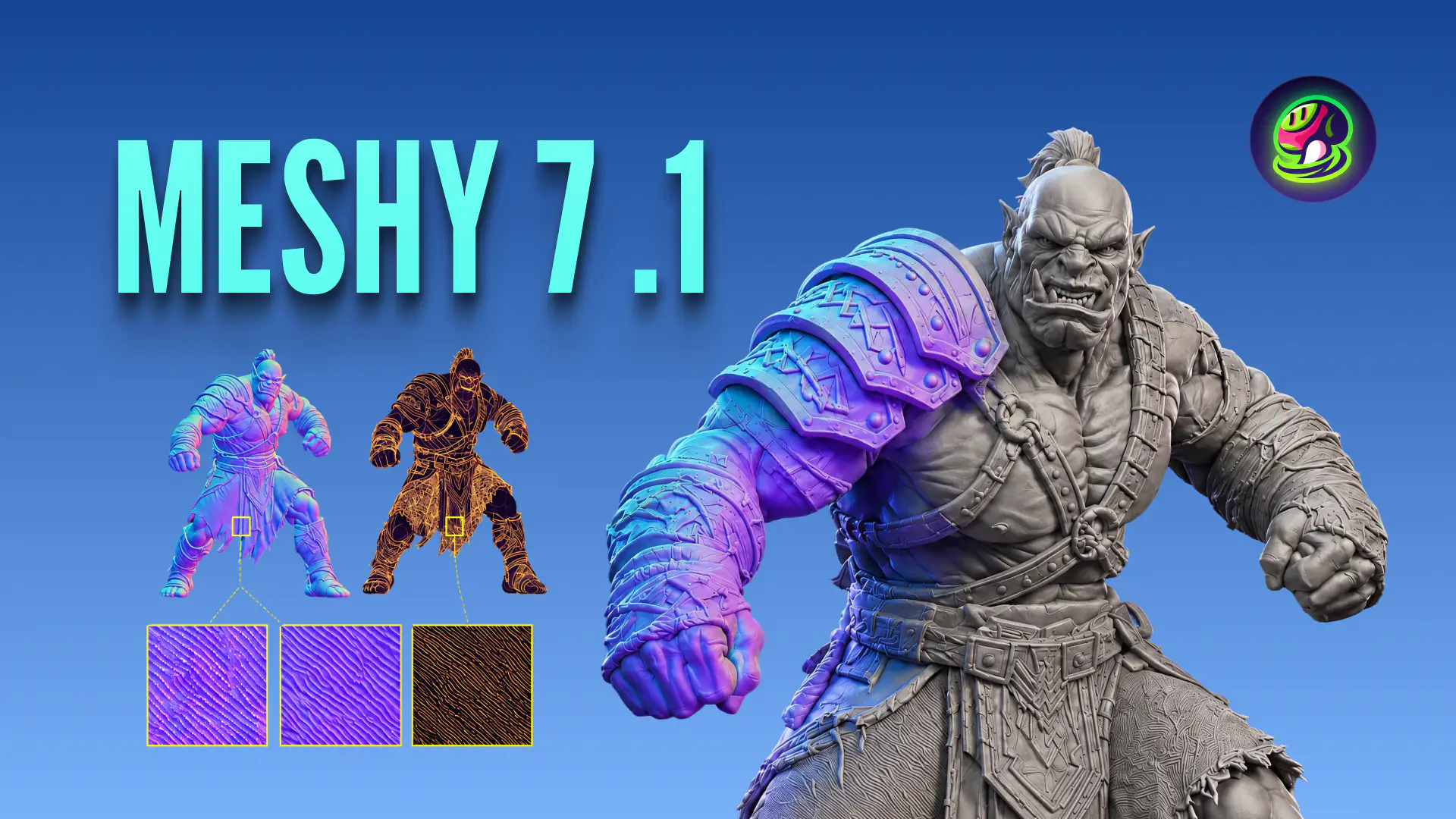
Meshy 7.1 introduces Ultra 4K geometry at 4096³
Meshy 7.1 adds an Ultra 4K image-to-3D mode that generates geometry at 4096³, with raw meshes reaching up to 80 million triangles before simplification. The mode is single-view only and requires a subscription, while game assets still need a downstream polygon budget and engine checks.
For 3D artists evaluating whether extra source-mesh detail helps close-up props, sculpting, baking or other workflows before game-engine optimization.
On September 10, 2026, Meshy released version 7.1, raising its image-to-3D geometry generation resolution from 2048³ to 4096³ in a new Ultra 4K setting. The 4K label refers to the three-dimensional generation resolution, not a 4K texture or final display resolution.
Meshy says an unsimplified raw mesh can contain up to 80 million triangles. That figure describes how much surface information the generation stage can hold; it is not a suggested triangle budget for a game engine.
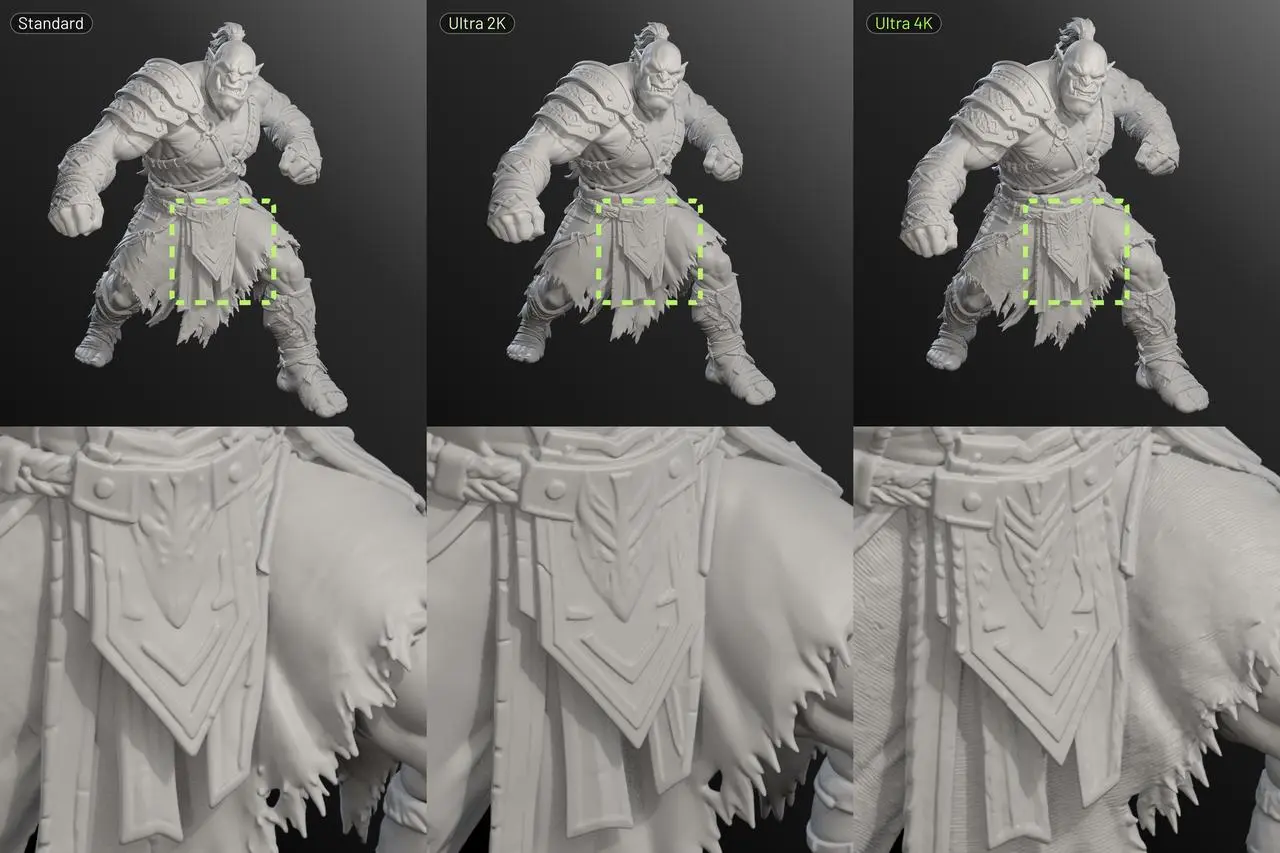
Ultra 4K puts more of the surface into geometry
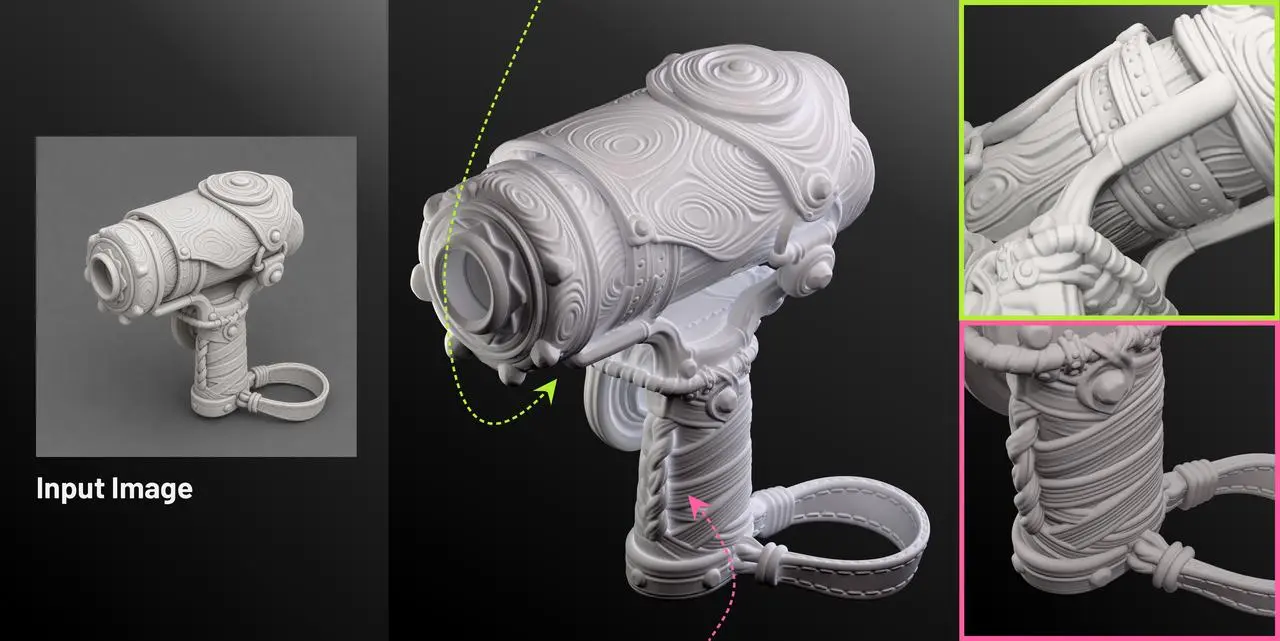
The cloth weave, raised wood grain, stitching and scales in Meshy's examples come from geometry rather than painted texture. For assets that need close silhouettes, a sculpting source or a normal-map bake, the denser source mesh provides more structure to decide what should survive downstream.
Ultra 2K works with single-view and multi-view generation, while Ultra 4K is currently single-view only. Meshy 7.1 is rolling out to all registered users, but Ultra 2K, Ultra 4K and downloads of Meshy 7.1 results require a subscription. The release does not announce a Meshy 7.1 API model identifier, so this update should currently be read as a workspace release.
Eighty million raw triangles are not an engine budget
The “up to 80 million triangles” figure is the upper bound before simplification. A game asset still needs a target based on platform, camera distance, number of visible instances, deformation and performance budget. Meshy's Remesh guide offers under 50,000 faces for PC and console games and under 10,000 for mobile as starting guidance, with fixed or adaptive targets and triangle or quad topology. Those figures are guidelines rather than universal limits.
A practical route is to preserve the Ultra 4K result as the detailed source and remesh a copy for the target scene. Compare the silhouette, small attachments and deformation areas before deciding which surface structure stays in geometry and which moves into normal or displacement maps. The asset still needs checks in the target engine, at its actual camera distance and inside a representative scene for memory, rendering and animation behavior.
Detail Richness is a Meshy-designed benchmark
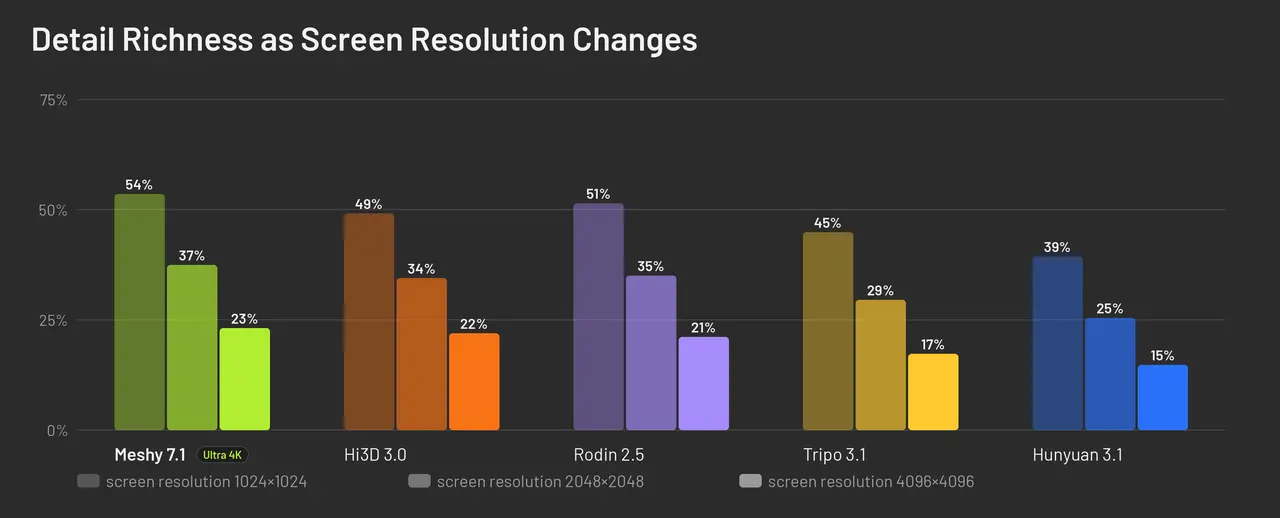
Meshy also introduced a Detail Richness metric. It renders a model from several directions at a fixed screen resolution and measures how much visible surface changes orientation significantly within one pixel. The benchmark uses structurally detailed but simply textured inputs, the highest available setting for each model and uncompressed geometry to reduce confusion between real structure, texture patterns and compression noise.
In Meshy's published results, Meshy 7.1 scores 53.5%, 37.4% and 23.1% at render resolutions of 1024, 2048 and 4096. At 4096, the closest listed model is Hi3D 3.0 at 21.9%. Meshy designed and ran this vendor benchmark, and says the benchmark tool will be released separately. The current numbers explain how the company measures detail; they are not an independently reproduced ranking.
Compare all three settings on one representative asset
Teams already using Meshy can start with one prop that genuinely needs close-up detail, generate it from the same reference in Standard, Ultra 2K and Ultra 4K, then compare the results under one material, lighting setup and camera distance. Ultra 4K adds practical value only if its extra geometry remains visible in the final shot and survives remeshing, baking and engine import.
Small background props, mobile asset sets and distant models are more likely to benefit from lower polycounts and a clear LOD budget. Meshy 7.1 raises the ceiling for a detailed source mesh; the asset's final size and role in the game should decide whether the highest setting is useful.
Sources (4)
No sponsorship or affiliate links in this article.